
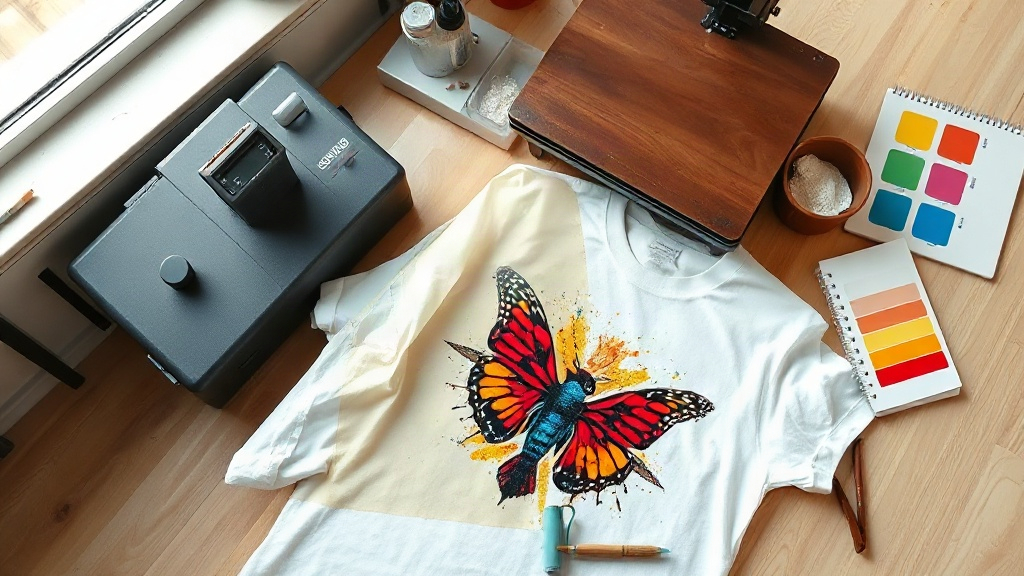
Most print on demand sellers discover DTF the same way: a customer orders a hoodie in a color that DTG handles poorly, or asks for a design with six colors and fine detail that heat transfer vinyl can never reproduce. Suddenly the standard toolkit looks limited. Direct-to-film transfers solve a very specific set of problems, and once you understand the mechanics, it becomes clear why so many small shops now keep a film printer running next to their heat press.
What DTF Actually Is
DTF stands for direct-to-film. A printer deposits water-based pigment inks onto a special PET film coated with a release layer, mirroring the artwork. While the ink is still wet, a fine thermoplastic powder is sprinkled across the printed area. The sheet is then cured, the excess powder is shaken off, and what remains is a flexible, rubbery layer bonded to the ink. That sheet can sit in a drawer for months until an order arrives.
When the order does arrive, you place the transfer on the garment, cover it, and press it at roughly 150 to 160 degrees Celsius for about 15 seconds. Peel it cold or warm depending on the film, and the design is permanently fused to the fabric. No pretreatment, no weeding, no color separation, no minimum order of 50 pieces from a screen printer.
The reason this matters for print on demand is simple: the decoration step is decoupled from the printing step. You can print a batch of transfers on Monday, then press them onto shirts one at a time for the rest of the month as orders trickle in. That is a fundamentally different workflow from DTG, where the printer needs the actual garment in front of it every single time.
Where DTF Beats the Alternatives
Fabric compatibility
DTG requires a cotton-heavy garment and a pretreatment step, and it struggles on dark polyesters because the white ink layer can crack or discolor. Vinyl requires weeding and only handles simple shapes. DTF adheres to cotton, polyester, blends, canvas, and even nylon, which means a single transfer inventory covers almost everything in your catalog.
Color and detail
Because the white ink layer is printed underneath the color layers, a DTF transfer shows up vividly on black and navy garments without any special handling. Gradients, photographic elements, and thin outlines all survive the process. If your niche involves detailed illustrations, pet portraits, or anything with soft shading, this is a meaningful advantage over vinyl.
Inventory logic
Blank garments take up space and tie up cash. Transfers take up almost none. A hundred designs fit in a single binder. For a print on demand operation running out of a spare room, that difference in storage footprint is not trivial.
The Real Cost Picture
Beginners usually compare only the film price and conclude DTF is expensive. That comparison is incomplete. Here is what actually goes into a single A4-sized transfer:
- Film sheet: a modest cost per sheet, and it drops sharply when you buy in packs of 100 or more.
- Ink: white ink consumption is the hidden variable. Designs with large solid white areas burn through it much faster than line art.
- Powder: surprisingly cheap per transfer, but you waste a lot if your shaking technique is sloppy.
- Labor: printing, powdering, curing, and pressing. This is where most people underestimate their true cost.
- Waste: misprints, clogged nozzles after idle periods, and failed presses.
A realistic all-in figure for a mid-sized design lands somewhere between one and two dollars, plus the garment. Compare that to what a contract printer charges for a single piece and the math usually favors doing it in-house, provided you are actually producing volume. If you press three shirts a week, the equipment will never pay for itself. If you press thirty, it will.
Common Mistakes That Ruin Transfers
Under-curing the powder
If the powder does not fully melt, the transfer will feel gritty and will peel after a few washes. The melted powder should look glossy and slightly translucent, not chalky. Oven curing gives more consistent results than a heat gun, but a heat gun works fine once you learn what fully melted looks like.
Wrong pressure, wrong peel
Too little pressure means the transfer sits on top of the fabric weave instead of anchoring into it. Too much pressure flattens the design and can push the edges into the garment, creating a visible outline. Follow the film manufacturer's peel temperature. Cold peel films will smear the print if you rush them.
Ignoring humidity
Powder absorbs moisture from the air. In a damp room, it clumps and spreads unevenly, which shows up as patchy adhesion. Store powder in a sealed container with a desiccant pack and you will avoid a whole category of mysterious defects.
Choosing Films and Powders
Not all film behaves the same. Double-sided matte film is the common workhorse for dark garments, while single-sided film suits lighter fabrics where you need less opacity. Thinner films drape better on stretchy materials; thicker films are more forgiving for beginners because they resist curling during pressing.
Powder comes in fine, medium, and coarse grades. Fine powder gives sharper edges and a softer hand feel, which matters for children's clothing and fitted tees. Coarse powder is more forgiving and cheaper, but the finished print feels noticeably thicker. Many shops keep both on the shelf and match the powder to the product.
Pricing Your DTF Products
Pricing should reflect the durability and quality of the decoration, not just the garment cost. A shirt with a full-color, wash-resistant print can command a higher price than a plain vinyl design, and customers generally accept that. What they do not accept is a print that cracks after five washes.
Test every new film and powder combination before it goes into production. Print a sample, press it, then run it through ten wash cycles. If the edges lift or the colors fade, change something before you list the product. This single habit prevents most refund requests and negative reviews in this category.
Frequently Asked Questions
Does DTF printing work on 100% polyester athletic wear?
Yes, and this is one of its strongest use cases. Polyester is where DTG often fails and where vinyl feels stiff. A properly pressed DTF transfer stays flexible on polyester and holds color well, though you should lower your press temperature slightly to avoid scorching the fabric.
How long do DTF transfers last once printed?
Stored flat, away from direct sunlight and humidity, cured transfers remain usable for many months. Some shops report good results after a year. Keep them in a sealed bag or binder rather than loose in a drawer where dust and moisture can settle on the powder layer.
Can I sell DTF-transferred shirts on Etsy or Amazon?
Both platforms accept them, but you are responsible for the durability claims you make. Avoid promising a specific number of washes unless you have tested it yourself. Accurate, modest claims protect your seller rating far better than optimistic ones.
Is a dedicated DTF printer necessary, or can I convert an inkjet?
Conversions exist and some sellers use them successfully, but they demand constant maintenance and frequent printhead care. A printer built for white ink and film handling will save you considerable troubleshooting time if you plan to produce regularly.
What is the biggest mistake new DTF sellers make?
Skipping wash testing. It is tempting to list a product the day the first transfer looks good coming off the press. Give it a week of real-world testing instead, and you will avoid the refund cycle that quietly kills small print on demand shops.