
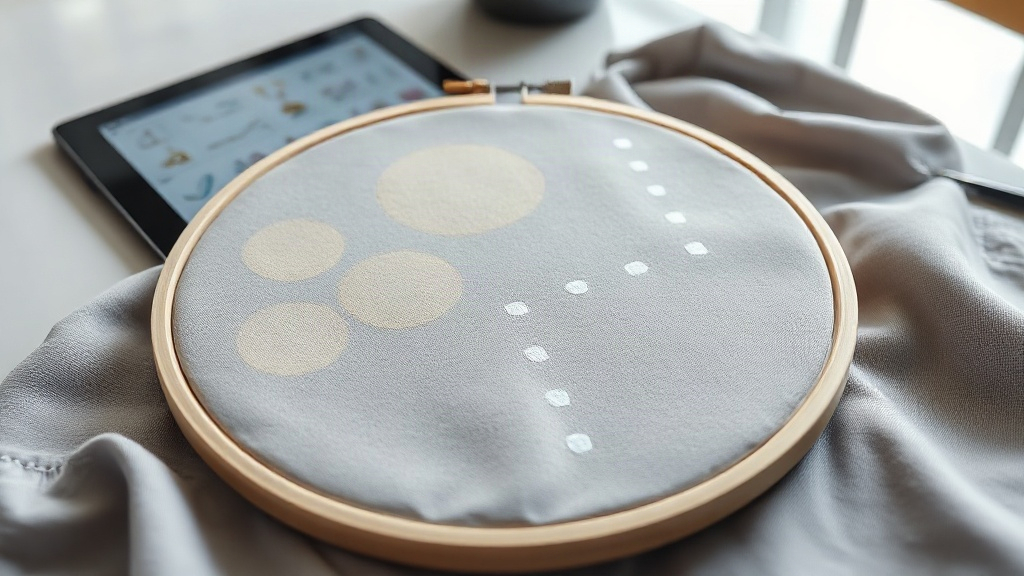
Imagine pulling a hoodie off the shelf and knowing exactly where to place your logo, or a tote bag that tells you the optimal stitch count before you even thread your needle. That's the promise of smart blanks, a new category of embroidery-ready garments and accessories embedded with technology or design features that make decorating easier, more precise, and more sustainable. Whether you're a hobbyist embroiderer or running a commercial shop, understanding smart blanks can save you time, reduce waste, and open up creative possibilities you might not have considered.
What Exactly Are Smart Blanks?
At its core, a blank is any undecorated item you embroider on: t-shirts, caps, bags, jackets. Smart blanks take that concept further by integrating elements that enhance the embroidery process or the final product. This could mean conductive threads woven into the fabric for wearable tech, heat-reactive inks that change color, or even QR codes printed on care labels that link to stitching guides. Some smart blanks focus on sustainability, using recycled fibers or biodegradable packaging. Others prioritize precision, with laser-etched guidelines that disappear after washing. The common thread is that these blanks are designed with the embroiderer in mind, solving real problems like hoop burn, fabric shifting, or guesswork in placement.
Why Smart Blanks Matter for Your Embroidery Business
If you've ever spent hours centering a design only to realize it's slightly off, you know the frustration. Smart blanks address these pain points directly. For example, some manufacturers now offer blanks with faint grid lines printed in water-soluble ink, so you can align your hoop perfectly every time. Others use fabric blends that resist puckering, meaning less stabilizer and faster production. Beyond convenience, smart blanks can be a selling point. Customers appreciate garments that are eco-friendly or have interactive features. By choosing smart blanks, you differentiate your offerings and appeal to a growing market that values innovation and sustainability.
Tech-Enhanced Fabrics
One of the most exciting developments is fabrics embedded with conductive silver fibers. These allow you to embroider functional circuits, like LED lights or sensors, directly into the garment. Imagine a winter hat with stitched-in heating elements or a fitness top that monitors heart rate. While still niche, these smart blanks are gaining traction in performance wear and cosplay. For embroiderers, the challenge is adjusting stitch density and tension to avoid damaging the conductive paths. But with practice, you can create wearable tech that's both stylish and functional.
Sustainable Smart Blanks
Sustainability is another driver. Many smart blanks now use organic cotton, recycled polyester, or bamboo blends. Some even come with a digital passport that tracks the garment's journey from field to finished product. For embroiderers, these blanks offer a way to align with eco-conscious clients. The key is to test stitchability: natural fibers may shrink differently, and recycled polyester can be tougher on needles. Always run a test stitch on a swatch before committing to a full order.
How to Choose the Right Smart Blank for Your Project
Not all smart blanks are created equal. Start by identifying your goal: are you looking for ease of hooping, tech integration, or sustainability? Then consider the fabric weight and stretch. Lightweight knits may need more stabilizer, while heavy wovens hold shape better. Next, check for any special features like pre-marked guidelines or conductive zones. Finally, order samples. Reputable suppliers like The Embroidered offer swatch packs so you can test before you buy. Remember, a smart blank should simplify your workflow, not complicate it.
Tips for Embroidering on Smart Blanks
Working with smart blanks requires a few adjustments. First, always use a sharp needle appropriate for the fabric; a ballpoint for knits, sharp for wovens. Second, reduce stitch density on conductive fabrics to prevent breakage. Third, use a water-soluble topper on textured surfaces to keep stitches crisp. Fourth, if the blank has printed guidelines, avoid ironing directly over them. Fifth, test washability: some smart features may degrade after multiple cycles. By following these tips, you'll achieve professional results even on high-tech materials.
Common Questions About Smart Blanks
What are smart blanks made of?
Smart blanks can be made from a variety of materials, including organic cotton, recycled polyester, bamboo, and even fabrics with conductive silver fibers. The choice depends on the intended function, such as sustainability or tech integration.
Can I use regular embroidery designs on smart blanks?
Yes, most smart blanks are compatible with standard embroidery designs. However, for tech-enhanced fabrics, you may need to adjust stitch density and use specialty threads to avoid damaging conductive elements.
Are smart blanks more expensive?
They can be priced higher than conventional blanks due to added features and sustainable materials. However, the increased efficiency and customer appeal often justify the cost, especially for premium projects.
How do I care for garments made from smart blanks?
Always follow the care label. Generally, wash inside out in cold water and avoid harsh chemicals. For conductive fabrics, remove batteries or electronic components before washing.
Where can I buy smart blanks?
Specialty suppliers and online retailers like The Embroidered offer a range of smart blanks. Look for suppliers that provide detailed specifications and sample packs.
Final Thoughts
Smart blanks represent a shift in how we approach embroidery, blending technology, sustainability, and user-friendly design. By embracing these innovative blanks, you not only streamline your process but also future-proof your craft. Whether you're stitching a simple monogram or a complex circuit, the right smart blank can make all the difference. Explore the options, experiment with samples, and watch your embroidery business thrive.