
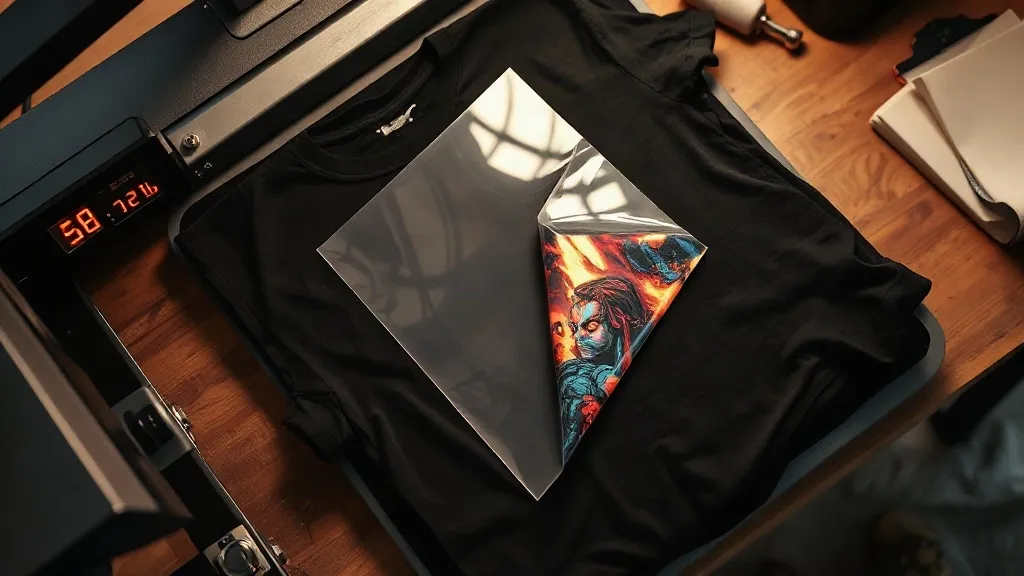
Most print shops stumble into dtf transfers the same way: a customer wants twelve hoodies with a full-color design, no minimums, and a deadline that makes screen printing impossible. You run the numbers, order a gang sheet, and suddenly a whole category of work you used to turn down becomes easy. That is the real appeal. Not the technology itself, but the fact that a two-person shop can now say yes to orders it used to refuse.
This guide is written for people who already know roughly what dtf is and want to get good at it. We will cover what separates a usable transfer from a frustrating one, how to press without guessing, which fabrics cause trouble, and how to price the work so you actually make money on it.
What you are actually buying when you order a transfer
A DTF transfer is a printed film: pigment ink laid onto a PET sheet, dusted with hot-melt adhesive powder, then cured. When you press it, the adhesive melts into the fabric while the ink film sits on top. That is the whole mechanism, and almost every quality problem traces back to one of those three layers.
Shops that order transfers regularly learn to judge a sheet before it ever touches a press. Hold it up to the light. The powder layer should look even and slightly matte, with no shiny patches where adhesive is missing and no thick clumps where it piled up. Bend a corner. A good sheet flexes without the ink cracking or flaking off the carrier. If the print feels greasy or the powder wipes away with a finger, the cure was incomplete and you are looking at a transfer that will wash out early.
Cold peel versus hot peel
Both exist, and the difference matters more than most tutorials admit. Hot peel films let you pull the carrier while the transfer is still warm, which speeds up production considerably on multi-piece orders. Cold peel films need to cool completely, usually thirty seconds to a minute, before you peel. The catch is that hot peel is less forgiving. Peel too fast and you drag the edges. Cold peel gives you a wider window to work with, which is why it is often the safer choice for shops just getting started or for detailed designs with fine lines and small text.
Pressing settings that hold up in the wash
Every supplier publishes a temperature and time recommendation, and every one of them is a starting point rather than a rule. Presses vary. Platen temperature readouts drift. Fabric thickness changes how much heat reaches the adhesive. What follows is a reliable baseline you can tune from.
- Temperature: 150 to 160°C (300 to 320°F) for most films. Cotton holds up at the higher end; blends and synthetics usually prefer the lower.
- Pressure: medium to firm. You want the adhesive pressed into the weave, not squeezed flat. If the design feels stiff and plastic after pressing, you are probably overdoing it.
- Pre-press: five to ten seconds on the garment before anything else. This is not optional. Moisture in the fabric is the single most common cause of transfers that peel at the corners.
- Press time: 12 to 15 seconds for the transfer itself.
- Peel: follow the film's spec, hot or cold, and peel at a shallow angle rather than straight up.
- Post-press: a second press with a cover sheet for five seconds improves wash durability noticeably, especially on cotton.
Wash testing is worth the effort. Press a sample, run it through five or six cycles inside out, and look at the edges. If the film starts lifting at the corners after the first wash, the problem is almost always pressure or pre-pressing, not the transfer itself.
Fabrics: where DTF shines and where it struggles
The reputation of dtf rests largely on its fabric range. Cotton, poly blends, tri-blends, canvas, even some nylons take a DTF transfer well, which is why it has become the default for shops that cannot stock a dozen different specialty films. A single order of mixed blanks no longer means switching processes halfway through.
There are limits worth knowing before you promise anything to a customer.
- Heavily textured fabrics such as ribbed knit, terry cloth, or coarse canvas leave gaps the adhesive cannot bridge. The print looks fine on the press and starts flaking within weeks.
- Waterproof and coated fabrics reject the adhesive outright. Rain jackets, some puffer shells, and coated bags are not candidates.
- Stretch fabrics need a film rated for elongation. On a standard film, a tight-fitting performance shirt will crack along the design as it stretches.
- Heat-sensitive synthetics can scorch or glaze at standard temperatures. Drop to 140°C and extend the time rather than pressing hotter.
Nylon and the moisture problem
Nylon is the classic headache. It absorbs moisture, it scorches easily, and it sometimes releases dye under heat. A pre-press of ten seconds at a lower temperature, followed by a test press on an inside hem, saves a lot of ruined jackets. If the hem shows any color transfer onto your cover sheet, stop.
How to choose a supplier, and when to look for dtf transfers near me
Most shops start by ordering from whoever shows up first in search results, then discover the hard way that turnaround time and consistency matter more than a few cents per sheet. A supplier who ships in 48 hours with reliable color is worth more than one who saves you a dollar and delivers in nine days.
Searching for dtf transfers near me is often the right instinct, though not only for shipping speed. A local or regional supplier lets you collect a rush order the same day, and it means you can ask questions about a specific film and get an answer from someone who has actually pressed it. When you are evaluating options, ask these questions directly:
- What film brand do you use, and can you send a sample sheet before I commit to a large order?
- What is your actual turnaround, not your advertised one?
- How do you handle color matching on reorders? Do you keep my file on record?
- What happens if a sheet arrives with incomplete powder coverage?
Order a small test batch first. Press it on the fabrics you actually use, wash it, and judge from that rather than from a website photo.
Gang sheets, nesting, and getting more out of each order
Transfer sheets are priced by the sheet, not by the design, so layout is where your margin lives. Nest designs tightly, rotate pieces where the artwork allows, and fill the leftover space with small one-color logos you can sell later. Shops that print a full sheet of nothing but customer orders are leaving money on the carrier film.
Keep a running file of small designs that sell: a chest logo, a sleeve mark, a simple wordmark. Fill gaps with those and you build a small inventory of ready-to-press pieces at almost no extra cost. When a walk-in wants one shirt in twenty minutes, you have something to sell them.
Pricing the work without underselling it
The temptation with transfers is to price them like vinyl: cheap, because the material is cheap. That math ignores labor, press time, and the cost of a redo. A realistic per-piece price accounts for the transfer cost, the garment, press time, and a margin for the occasional mispress. For a single shirt, most shops land somewhere between the price of a vinyl job and the price of a small screen print run, and customers accept that readily once you explain that there is no minimum and no setup fee.
Where transfers really pay off is in the awkward middle: orders too small for screen printing and too large to be worth vinyl weeding. Ten to fifty pieces is the sweet spot. Quoting those jobs quickly, with confidence about the fabric and the finish, is a genuine competitive advantage.
Frequently asked questions
How long does a DTF transfer last after washing?
With correct pressing and normal care, most transfers hold up for fifty washes or more on cotton. Wash inside out, cold water, and skip the dryer's high heat. Failures in the first few washes almost always trace back to moisture during pressing or insufficient pressure rather than the film itself.
Can I press a DTF transfer with a home iron?
You can, but results are inconsistent. A home iron does not deliver even pressure across the design, so edges tend to lift. If you are testing the waters, a small heat press is a far better investment than a stack of transfers you cannot apply properly.
Do DTF transfers work on dark and light shirts equally?
Yes, and that is one of the main reasons shops like them. The white ink layer sits under the color, so a design reads the same on black as it does on white. You do not need separate white and dark garment versions of the same artwork.
What is the difference between DTF and DTG?
DTG prints directly onto the garment, which means the printer needs the shirt in hand and cotton-only fabrics. DTF prints onto film that can be stored and pressed later, on far more fabric types. For shops without a DTG printer, transfers remove the equipment cost entirely.
Can I reuse a transfer sheet if the first press goes wrong?
No. Once the adhesive has melted into a garment, the film is spent. This is why test pressing on scrap fabric before running a full order is worth the two minutes it takes.