
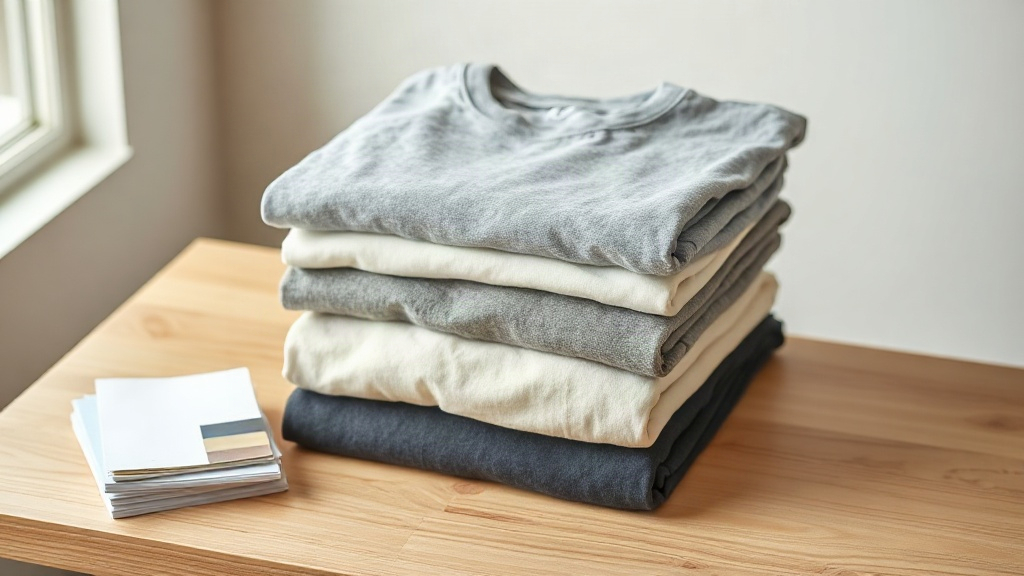
The fastest way to lose a customer in the apparel business is a shirt that feels cheap before anyone reads the design. That is why the smartest shops I have worked with spend more time choosing their blank than their artwork. Smart blanks are not a single brand or a single fabric. The term describes the blanks that make sense for your specific market, your print method, and your price point, so the finished garment looks and feels like something worth wearing twice a week. Get that part right and everything downstream, from photography to reorders, gets easier.
I spent the last few years printing small runs for skate shops, church groups, and one very demanding CrossFit gym. The lessons repeat every time. A blank that prints beautifully can still fail at retail if the fit is wrong. A blank that fits perfectly can still ruin a design if the fabric surface fights the ink. Below is what actually matters when you are building a printed tee line from scratch, plus where DTF transfers and brands like Shaka Wear fit into the picture.
What Makes a Blank Smart, Not Just Cheap
Price is the loudest signal and the least useful one. A blank that costs $2 less per unit but pills after three washes will cost you the customer, the review, and the reorder. Smart blanks balance four things: fabric weight, hand feel, fit consistency, and print compatibility.
Fabric weight and what it signals
For a modern retail tee, 5.5 to 6.5 oz is the sweet spot. Heavier than 7 oz reads as workwear or vintage, which is great if that is your brand, and awkward if you are selling minimalist typography to a college campus. Lighter than 4.5 oz is fine for promotional giveaways where the shirt will end up in a drawer anyway, but it will not survive a paid product photo.
Ring-spun cotton feels softer and takes fine detail better than standard open-end cotton. If your design has thin lines, small type, or gradients, this matters more than weight. I have watched a clean one-color logo look muddy on a rough carded cotton blank and crisp on a ring-spun one at the same price.
Fit consistency across sizes
Order one medium, one large, and one 2XL from your candidate blank before you commit. Lay them flat, measure the chest and body length, and compare against the size chart. Blanks that run small at the top of the range cause returns, and returns kill margins on low-volume runs. A blank that runs true across the whole run is worth paying a little more for.
Why Shaka Wear Keeps Showing Up in Streetwear Conversations
Shaka Wear built its reputation on heavyweight cotton tees with a boxy, streetwear-friendly cut. If your audience is buying oversized fits, the brand is worth testing. The fabric holds structure after washing, the shoulder drop works with wide chest prints, and the weight supports bold graphics without looking flimsy.
That said, heavyweight is not universal. A 6.5 oz boxy tee looks intentional on a 22-year-old skater and looks like a mistake on a 50-year-old attending a corporate retreat. Match the blank to the person wearing it, not to the trend you saw on social media last week.
Where heavy blanks win
- Wide chest and back prints with large blocks of color
- Puff and high-density prints that need a stable surface
- Brands selling oversized, drop-shoulder silhouettes
- Garments meant to be worn as outer layers, not undershirts
Where lighter blanks win
- Minimalist typography and one-color line art
- Summer festivals and anything worn in humid heat
- Retail price points under $25 where weight is not the selling point
- Layering pieces and fitted women's cuts
Matching Blanks with DTF Transfers
Direct-to-film has changed the game for small shops because it removes the setup costs of screen printing and the fabric restrictions of basic vinyl. A well-made DTF transfers sheet bonds to cotton, poly blends, and tri-blends, which means you can keep one blank strategy and one print method across your whole catalog.
The catch is that not every blank plays nicely with film. Here is what I check before committing a full run:
- Fabric composition. 100% cotton and cotton/poly blends are the safest. High-poly performance shirts need lower press temperatures and a gentler peel, or the transfer will crack at the edges.
- Surface texture. Open-end cotton with a rough face can leave a faint texture visible through the print. Ring-spun and combed cotton give a smoother result.
- Dye migration. Deep reds, navy, and black on poly-rich blanks can bleed into the print over time. A low-bleed film or a poly-blocker underlay solves most of it.
- Wash durability. Press a sample, wash it five times inside out, and inspect. If the edges lift, your pressure or dwell time is off, not the blank.
Press settings vary by film brand, so follow the manufacturer's chart rather than a number you saw in a forum. Most failures I see come from guessing at pressure or peeling too hot.
Building a Blank Strategy That Scales
The temptation is to stock every color and cut a customer might ask for. That path leads to dead inventory and cash tied up in sizes nobody buys. A better approach is to pick two blanks, one heavyweight and one midweight, and build your entire line around them.
Two blanks means one size chart, one press setting, one photography setup, and one reorder conversation with your supplier. It also means your customers learn what your shirts feel like, which is how you build a brand instead of a one-off print shop.
A simple test before you buy in bulk
Order a sample of each candidate blank in medium and 2XL. Print the same design on both using the same transfer. Wash one set and leave the other untouched. Compare color, hand feel, shrinkage, and collar shape. The blank that survives that test with the least drama is your smart blank, regardless of what the spec sheet claims.
Common Mistakes That Cost Repeat Customers
- Choosing blanks by unit price alone and ignoring wash durability
- Mixing three brands in one drop so sizes fit differently across the catalog
- Printing a lightweight blank with a heavy design and blaming the film when it cracks
- Ignoring dye migration on dark polyester and shipping shirts that bleed after two washes
- Skipping the pre-shrunk check and shipping a large that fits like a medium
Each of these shows up in reviews as "runs small" or "print faded," and both phrases tank conversion on your product page.
Frequently Asked Questions
What exactly are smart blanks in apparel printing?
Smart blanks are the blank garments chosen because they match your print method, your customer's fit expectations, and your price point, rather than because they are the cheapest option available. The term is about fit for purpose, not a specific brand.
Do DTF transfers work on Shaka Wear heavyweight tees?
Yes. Shaka Wear tees are typically 100% cotton or cotton-rich, which is one of the easiest surfaces for DTF film to bond to. Use standard cotton press settings, medium pressure, and peel after the transfer cools. Wash inside out in cold water to extend the print life.
How many times should a printed tee survive washing before it is a problem?
A properly applied DTF print on a quality blank should hold up through at least 30 to 50 home washes with cold water and inside-out drying. If edges lift or colors fade before 15 washes, check your press settings before blaming the blank.
Should I stock one blank or several for a print-on-demand shop?
Start with two: one heavyweight for streetwear-style drops and one midweight for everyday retail. Adding more blanks multiplies your size charts, photography, and inventory risk without adding much customer value.
How do I test a blank before ordering in bulk?
Order samples in medium and 2XL, print the same design on each with the same transfer, wash one set five times, and compare shrinkage, color, and collar shape. Buy the blank that holds up with the fewest surprises, then negotiate pricing at volume.